Marveling at Marbles with Brian Martens
 The latest volume in the ASCSA’s Agora series, Brian Martens’s Marble Statuettes of the Roman Period (Agora XXXIX), presents nearly 700 Roman-period marble statuettes and statuette fragments excavated from the Athenian Agora. This corpus constitutes one-sixth of the Agora’s rich sculpture collection and is meticulously described, analyzed, and illustrated with stunning new photographs. But this volume is far more than the primary publication of an impressive archaeological dataset. Martens adeptly uses this robust assemblage to investigate important questions about the production, iconography, and uses of ancient marble statuary. He reveals a hitherto unrecognized thirst for small divine images in Roman-period Greece and provides new insights into marbleworking, trade patterns, and private religious practices in the wider Mediterranean. Martens recently spent some time with us to discuss his work on the Roman-period statuettes and his continuing projects at the Agora and beyond.
Marble Statuettes of the Roman Period grew out of Martens’s long involvement with the Agora excavations, which began in 2008 when he served as a volunteer excavator. He returned year after year, eventually supervising the excavations in the area behind the Stoa Poikile. Despite nearly 20 years at the Agora, Martens admits, ‟I wish I could say that I have excavated a marble statuette during that time—it hasn’t happened yet!” He acknowledges, however, that the opportunity to work with material outside one’s area of expertise is one of the great benefits of the Agora excavations: “For me, the most extraordinary thing about working in the Agora trenches has been the opportunity to study a full cross-section of the city’s past. Owing to the continuously occupied nature of the site, I have excavated and studied Mycenaean tombs, Archaic shrines, Late Roman wells, and Byzantine houses. Working at the Agora has given me a deep curiosity for the history of Athens across all periods—not just one slice of its past, but the whole story.”
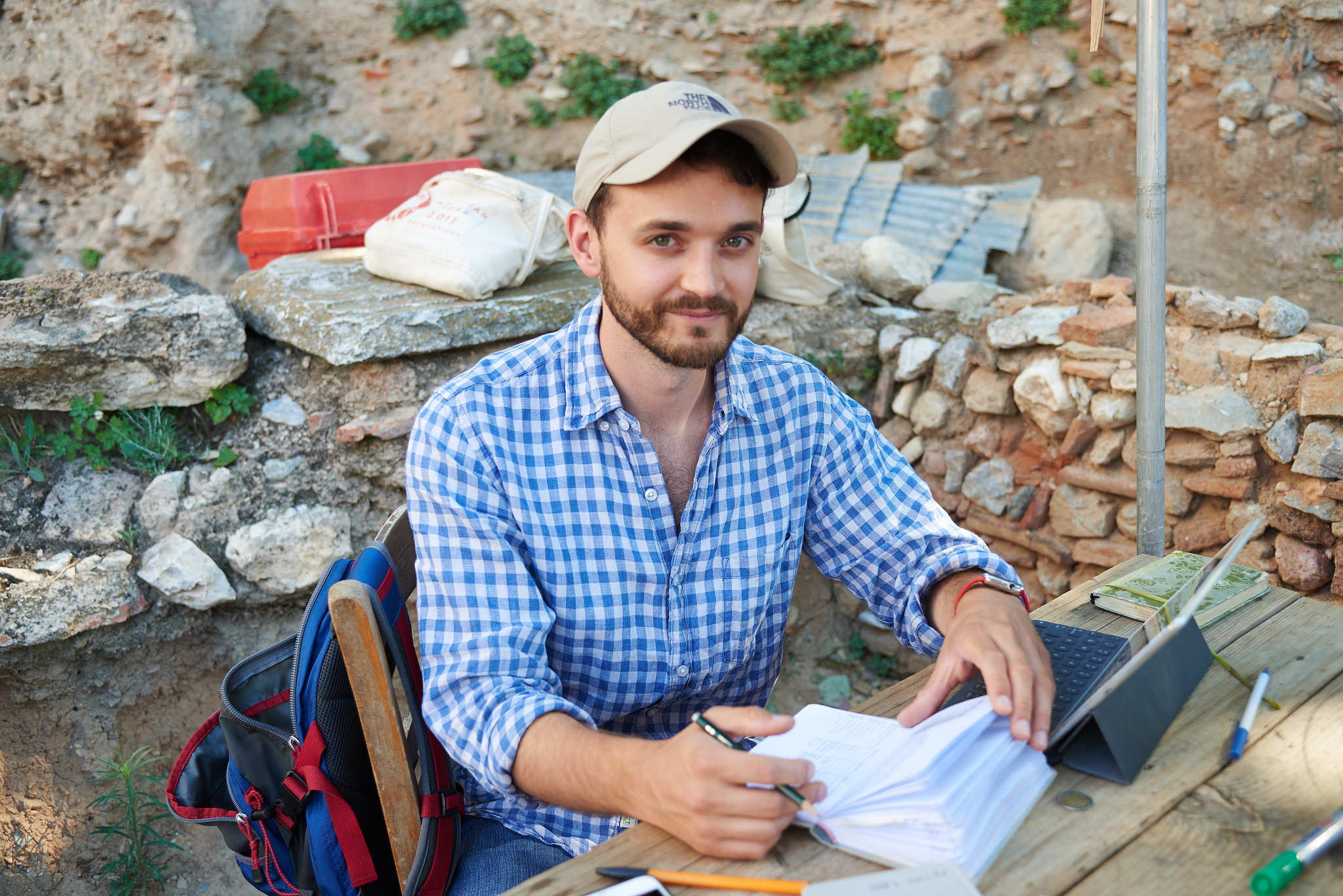
Martens in the field at the Agora excavations in 2017 (Photo C. A. Mauzy)
His long tenure at the Agora has provided other benefits too, not least of which is mastering the day-to-day operations of the excavation. Knowing how to read the Agora notebooks and other excavation records proved a boon to Martens’s research on the marble statuettes, and he praises the great care and thought that went into establishing those systems early in the excavation’s history: ‟The documentation of finds at the Agora has been remarkably consistent over the last near-century of excavations. Lucy Talcott, who designed the Agora recording system, was a woman ahead of her time, and the proof of this is the enduring success of a system designed long before the digital age that works seamlessly today. I have great admiration for the early excavators whose hard work and concern for the past have made my work possible.”
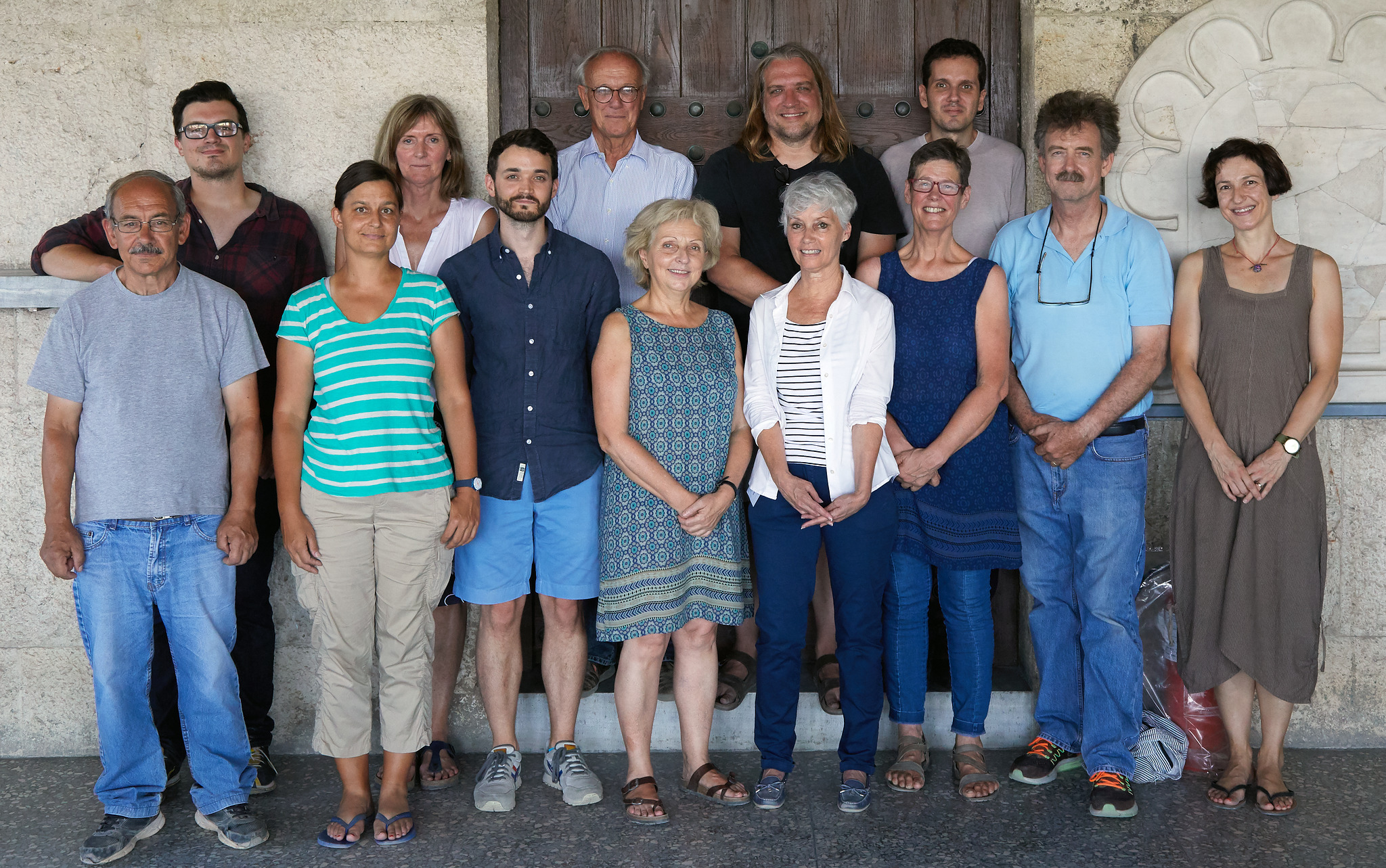
Excavation staff at the Athenian Agora in 2019 (Photo C. A. Mauzy)
Other scholars and staff working within the walls of the Stoa of Attalos have also provided critical support throughout the development of this project. The camaraderie around the Agora tea table inspired many of the ideas that took shape within the book, with Barbara Tsakirgis and Andrew Stewart serving as sounding boards before their passing, and Sheila Dillon, Laura Gawlinski, Carol Lawton, Kathleen Lynch, and Susan Rotroff offering invaluable guidance on publishing archaeological material. The Agora staff, especially Sylvie Dumont, Aspa Efstathiou, Pia Kvarnström, and Bruce Hartzler, provided critical access to Agora records. Maria Tziotziou helped examine the surface of the sculptures in the conservation laboratory. The book’s spectacular photographs, most of which were newly commissioned, are the work of Craig Mauzy and Jeff Vanderpool (nearly 2,800 photos were produced by Craig alone!). Yannis Maniatis and Dimitris Tambakopoulos conducted the marble provenance studies, which confirmed that some Athenian sculptors were working with nonlocal marbles, including Thasian, Parian, and, unexpectedly, Dokimeian.
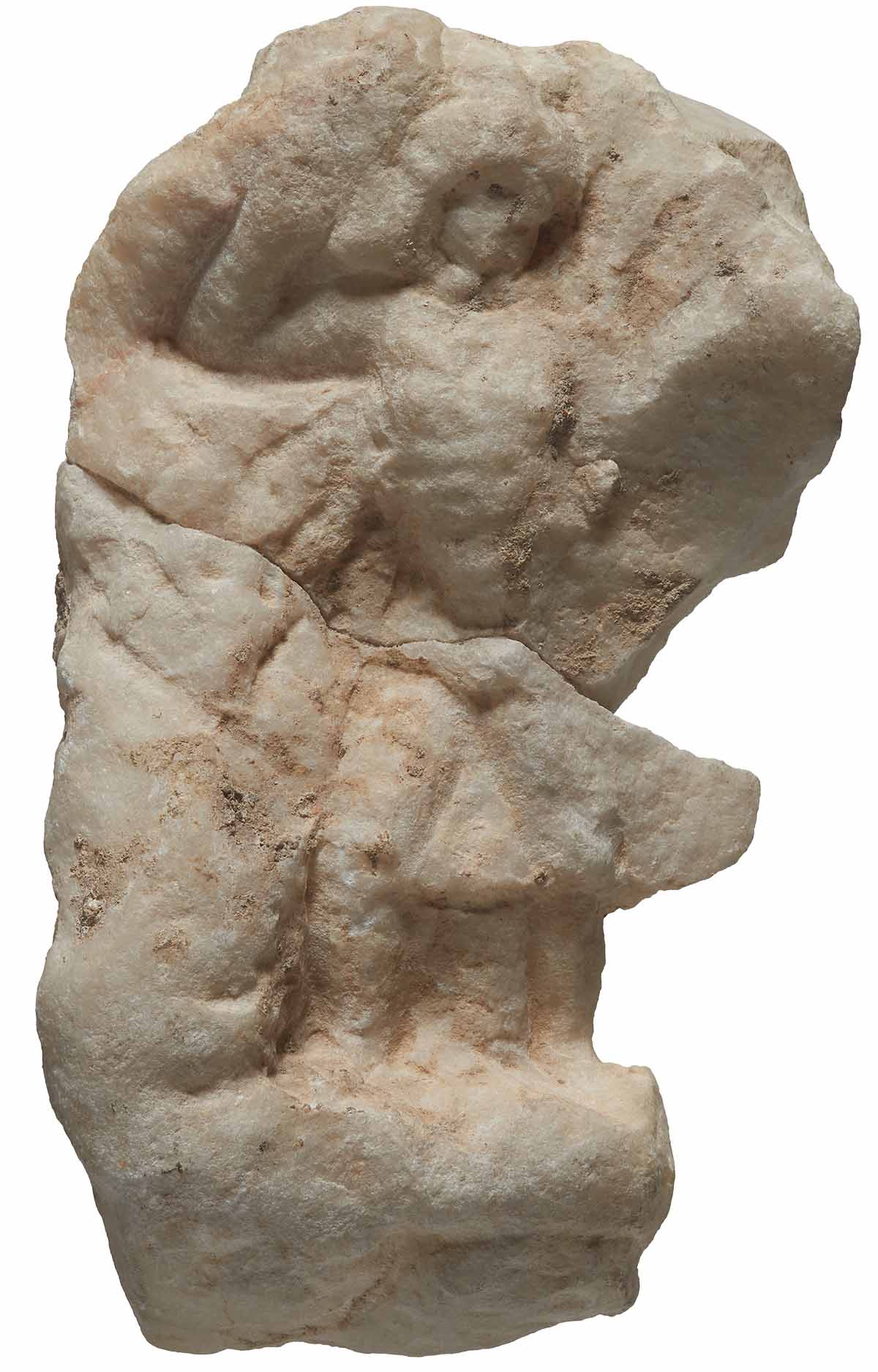
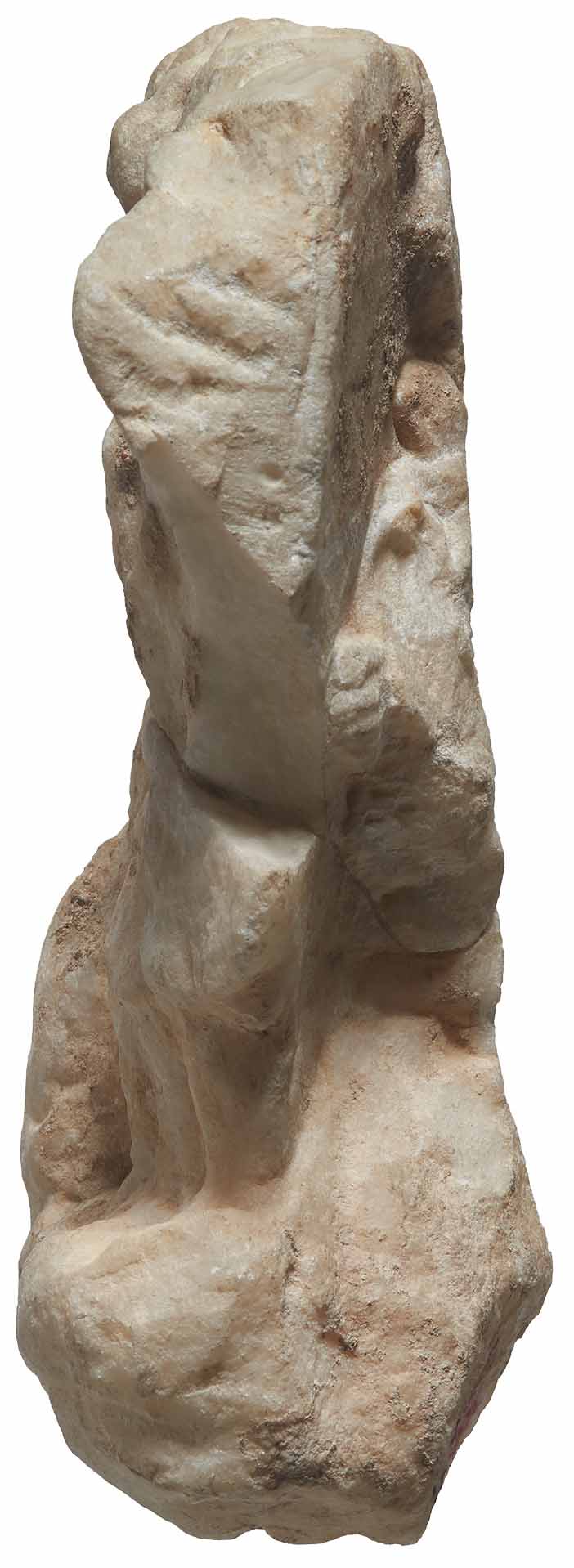
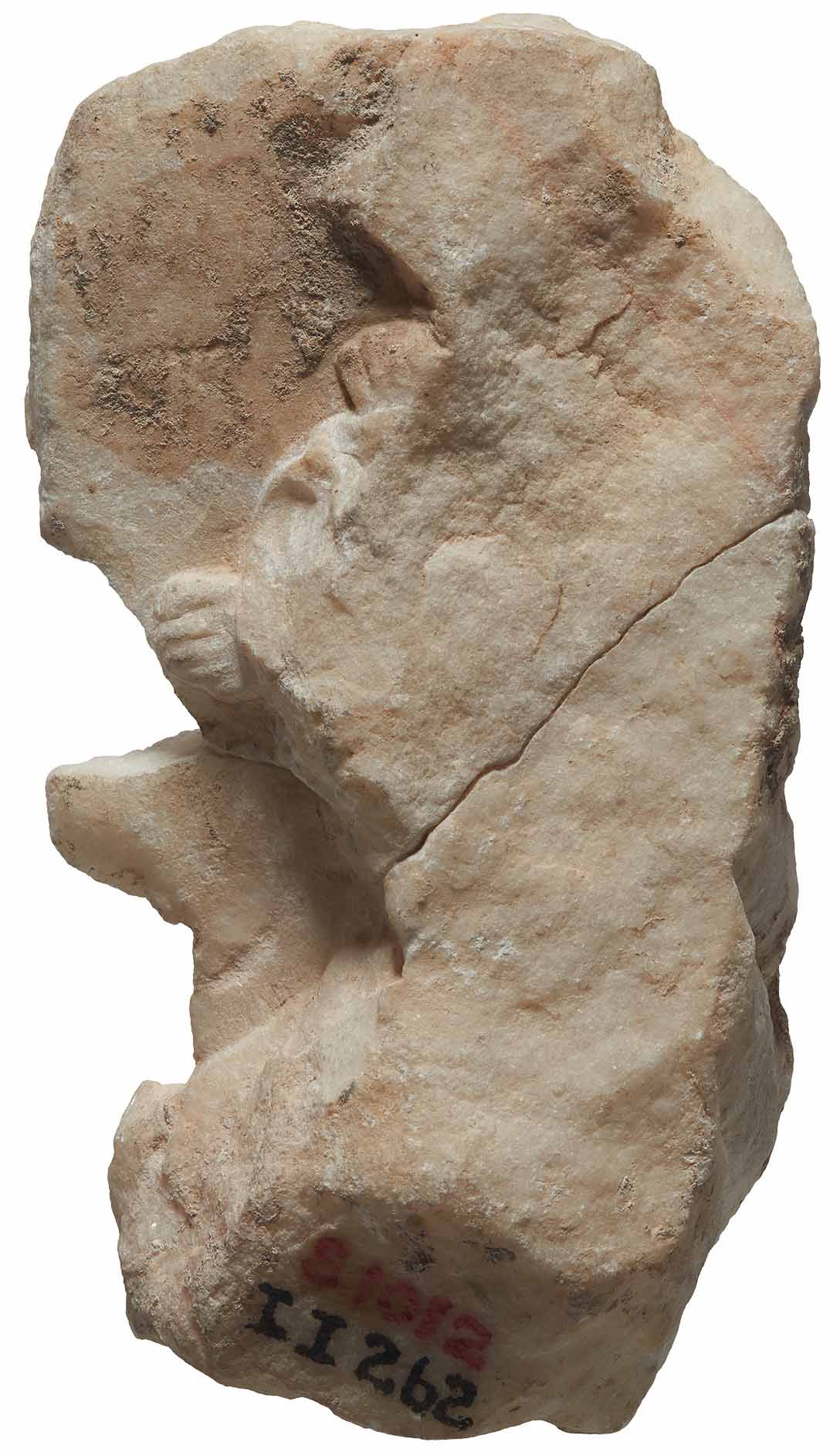
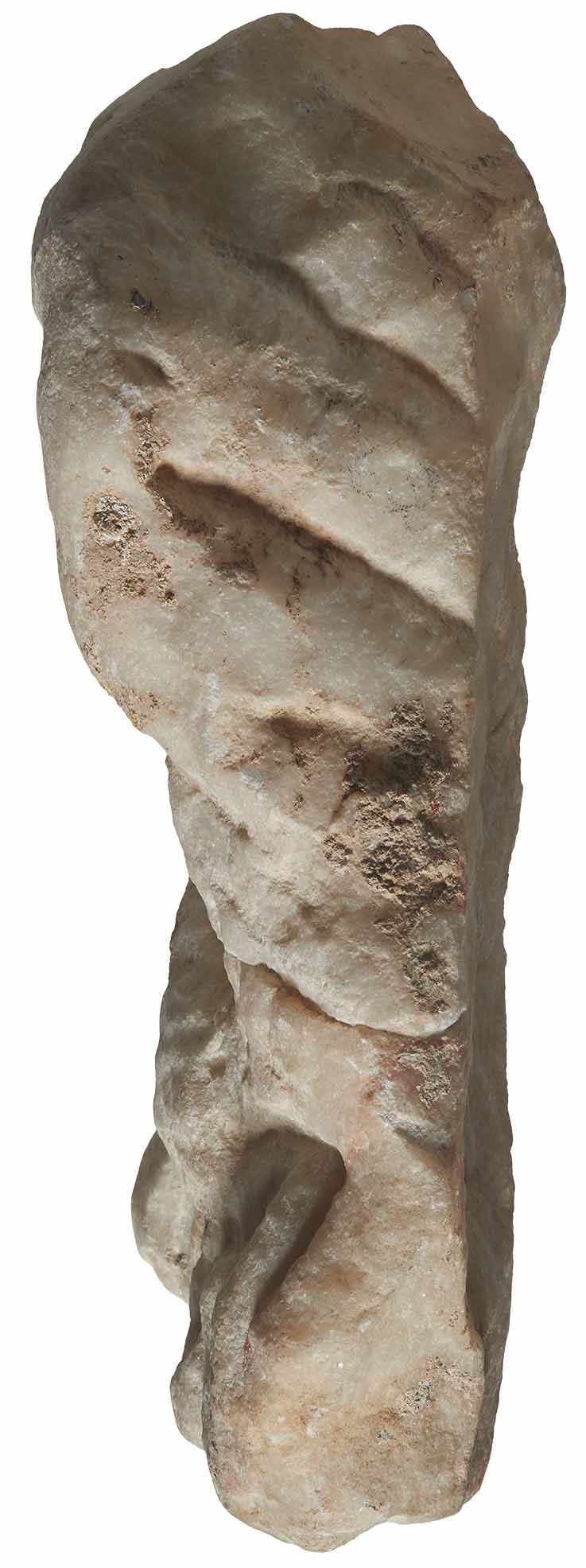
Unfinished statuette of Artemis carved from a reused block (311), mid-3rd century CE (Photos C. A. Mauzy)
With the support of his Agora colleagues and his doctoral supervisor, Bert Smith, Martens approached the Roman-period statuettes as an archaeological dataset rather than as an exercise in chronological classification. In the early stages of the project, Martens recalls often being asked of his material, “But how can you date them?” Placing a narrow date on these objects is challenging due to both their material and their subject matter. Marble was often reused in antiquity, causing objects to move—sometimes quite far—from their original use context. Several such itinerant objects are discussed in the book, including an unfinished statuette of Artemis (311) found in the filling of the Post-Herulian Wall. This statuette preserves evidence of at least three phases of use. In its first iteration, it likely functioned as either a large-scale statue or an architectural block but was cut down into smaller blocks sometime later. A statuette of a standing female figure was carved from one of these blocks. At some point this figure seems to have broken, and a new statuette of Artemis was carved on the underside of the plinth. Ancient marbleworkers knew well how to recycle this precious material!
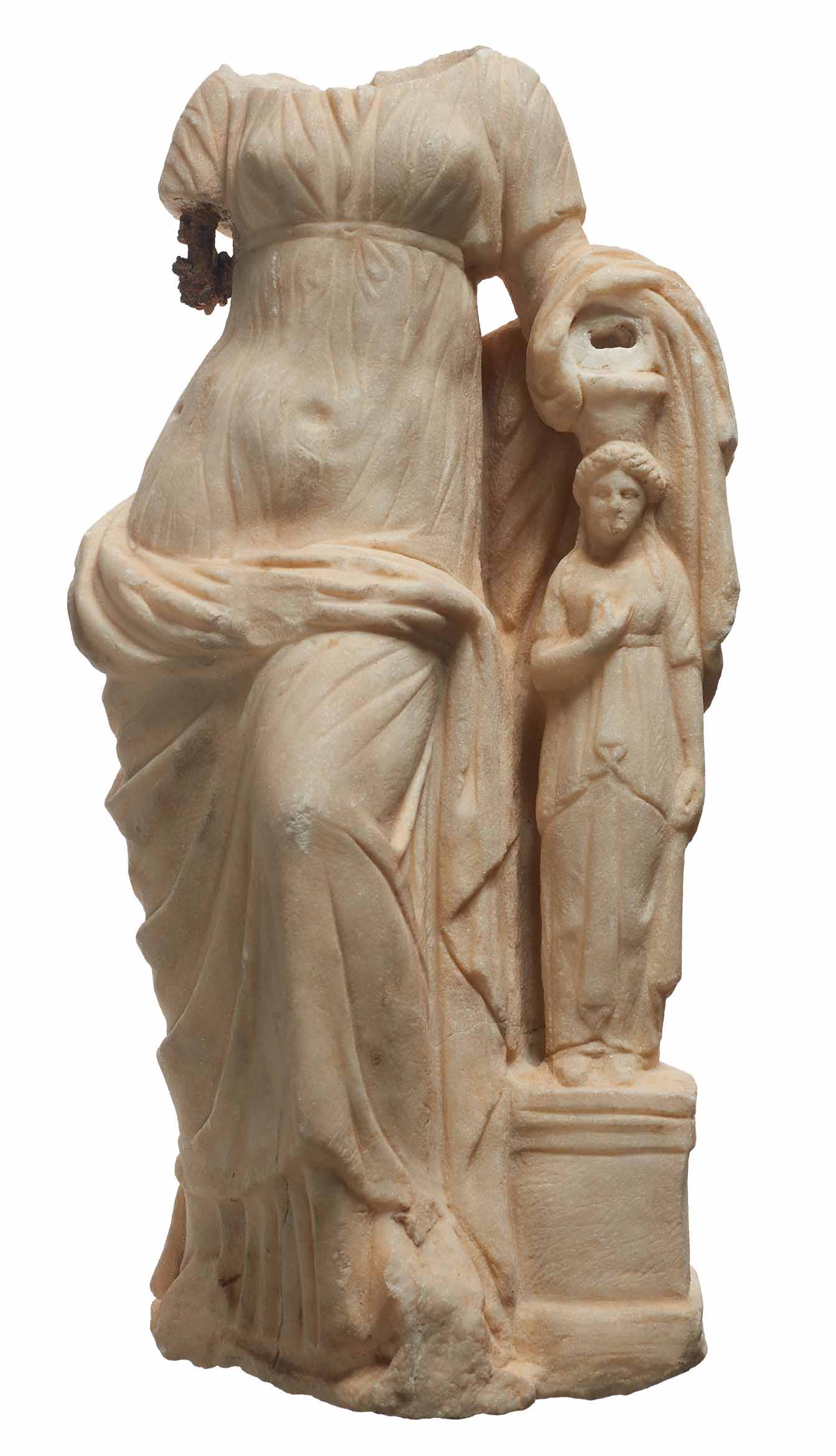
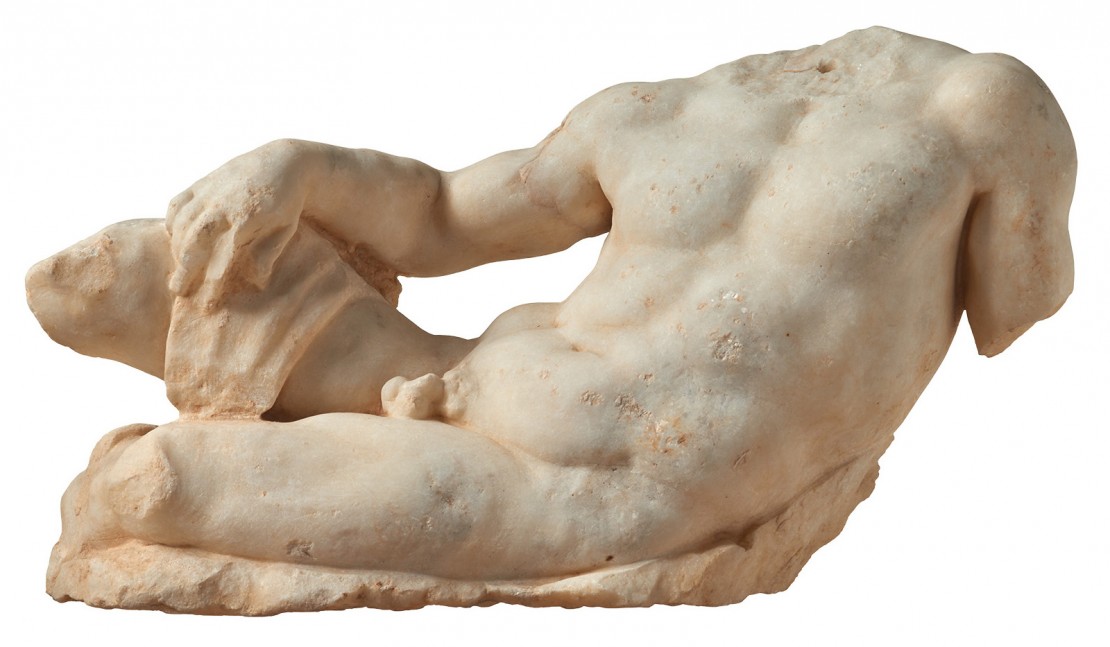
Statuette of Aphrodite leaning on an idol (1), Roman period (Photo C. A. Mauzy)
Further complicating attempts at dating objects within this corpus is the subject matter; the iconography and production techniques of divine images changed relatively little over time. Martens’s archaeological approach to the material not only reveals the individual life stories of each statuette, as told through the evidence of human interaction preserved in the marble surface, but also centers of Athenian statuette production, as determined from a comprehensive analysis of findspot data for the entire assemblage. Martens uses the accumulated evidence to offer significant new insights into private devotional practices in Roman Athens. One of the surprising results of his study concerns the identity of the deities whom Athenians were worshipping privately, whether in their homes or in sanctuaries. Despite Athena’s close connection to the city, statuettes of the goddess—as well as those of other civic deities—occurred relatively infrequently among the finds from the Agora. Images of Aphrodite, on the other hand, were especially numerous. Within these private contexts, Athenians sought the aid of deities more often associated with personal concerns, such as health, prosperity, and protection, than those with prominent civic attachments.
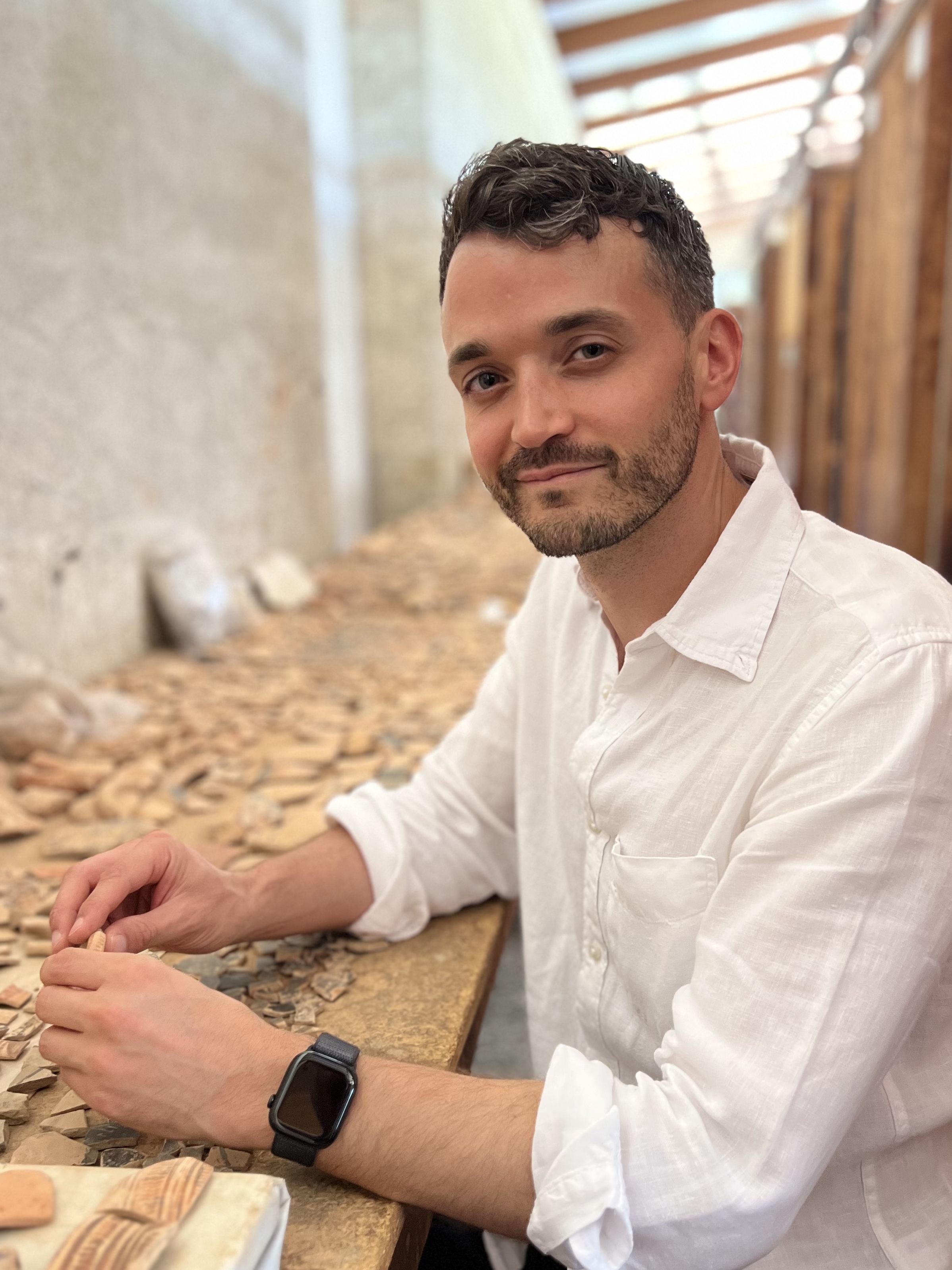
Martens sorting pottery at the Agora in 2025 (Photo T. Van Damme)
Marble Statuettes of the Roman Period exhibits the thorough documentation and analysis that comes out of a painstaking firsthand study of the material. “By taking an archaeological approach to the whole assemblage,” Martens notes, “I thought it would be possible to overcome the limitations of studying single pieces in isolation. In the book, I try to reconstruct a collective life history of the assemblage and the wider Athenian milieu to which it belongs, from production and trade, to use, reuse, and repair, to abandonment.” His close and careful looking also led to the discovery of about a dozen new joins, and he is excited by what future research in Athenian storerooms might reveal about the city’s ancient sculptural production and consumption. It is to such projects that Martens now turns. He just completed a restudy of the marble and bronze statuary from the Antikythera shipwreck and is collaborating on a project involving the sculptures of the Augustan Victory Monument and Great Theater at Nikopolis. But the Agora continues to draw him back. He is working on a study of the unfinished marble sculptures excavated at the site as well as the publication of the excavations on the Agora’s north side, a project he is co-authoring with John Camp, former director of the excavations. Martens credits Camp with starting him on his archaeological path: “Greece is a long way from the fields of Iowa where I grew up. I am forever grateful for the opportunity that John gave me to work at the Agora.”
Marble Statuettes of the Roman Period (Agora XXXIX) can be ordered from our distribution partner, ISD.